Openings & gaps Both
Opening range breakout with follow-through
Breakout from a balanced opening range. Strong breakout bars and subsequent closes show acceptance.
Read the sequence.
01 / OBSERVE → DECIDE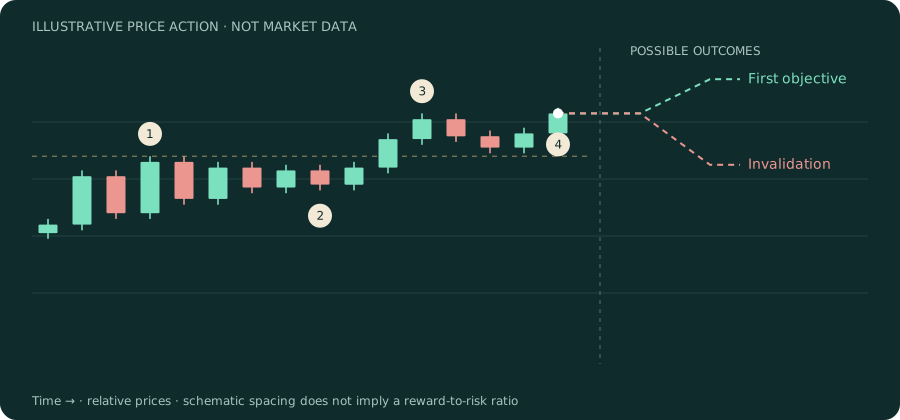
- ContextBreakout from a balanced opening range
- PressureStrong breakout bars and subsequent closes show acceptance
- SetupBreakout from a balanced opening range. Require rejection or acceptance at the marked structure.
- DecisionPullback that holds outside the opening range
The decision map
02 / QUICK REFERENCE- Location
- Breakout from a balanced opening range.
- Evidence
- Strong breakout bars and subsequent closes show acceptance.
- Trigger
- Pullback that holds outside the opening range.
- Invalidation
- Return and acceptance inside the opening range.
- First objective
- Opening-range height projection.
- Pass when
- Chasing a large breakout bar with poor structural reward.
03 / THE FULL ARGUMENT
Thesis & participant logic
Supplied study draft · adapted Brooks-style prose, not a quotation from Al Brooks
The open formed a balanced range. Price then broke out with strong bars, closes near the extreme and follow-through. I will enter on the breakout pullback rather than chase an overextended bar. My thesis is wrong if price returns into the opening range. I will target a measured move based on the range height.
04 / FROM IDEA TO A PLAN
Manage the thesis, not the need to be right.
Before entry
Write the structural invalidation and first realistic objective. Size to the loss you have already accepted, including costs and possible slippage. If the stop is unaffordable, reduce size or pass.
After entry
Reassess follow-through against the evidence above. Do not widen the stop or add because price “has gone too far.” A bounce to your average entry is not a market thesis.
At the objective
Opening-range height projection. Decide ahead of time whether to exit or retain a defined remainder. Continue only while structure and follow-through support the trade.
During review
Record the entry-time chart, planned risk, maximum adverse excursion, actual exit, and whether the thesis was invalidated. Judge the decision separately from the outcome.