Trend continuation Short
Spike-and-channel bear continuation
Upper edge of an orderly bear channel. Rallies remain corrective after the initial spike.
Read the sequence.
01 / OBSERVE → DECIDE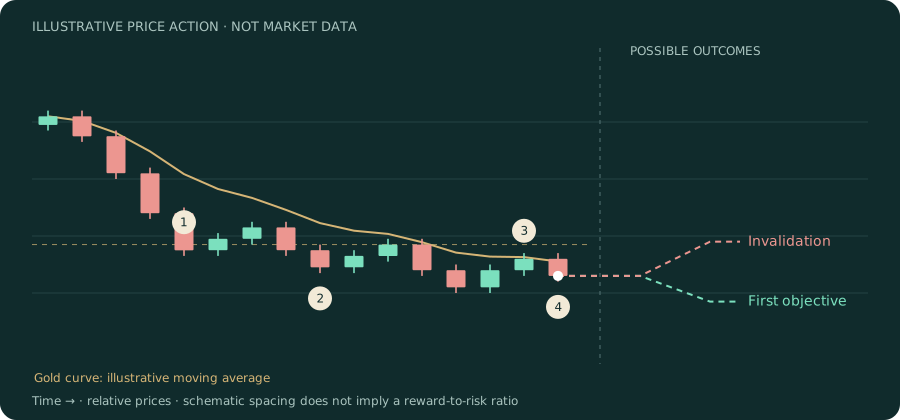
- ContextUpper edge of an orderly bear channel
- PressureRallies remain corrective after the initial spike
- SetupUpper edge of an orderly bear channel. Require rejection or acceptance at the marked structure.
- DecisionFailed bull attempt at channel resistance
The decision map
02 / QUICK REFERENCE- Location
- Upper edge of an orderly bear channel.
- Evidence
- Rallies remain corrective after the initial spike.
- Trigger
- Failed bull attempt at channel resistance.
- Invalidation
- Bull breakout above the last lower high with follow-through.
- First objective
- Channel low.
- Pass when
- The channel is exhausting into major support.
03 / THE FULL ARGUMENT
Thesis & participant logic
Supplied study draft · adapted Brooks-style prose, not a quotation from Al Brooks
A strong bear spike established Always In Short. The market is descending in a bear channel, and rallies show limited buying pressure. I will sell near the upper channel boundary, EMA or prior breakdown point after a failed bull attempt. My thesis is wrong above the last structural lower high. I will target the channel low and measured-move magnets.
04 / FROM IDEA TO A PLAN
Manage the thesis, not the need to be right.
Before entry
Write the structural invalidation and first realistic objective. Size to the loss you have already accepted, including costs and possible slippage. If the stop is unaffordable, reduce size or pass.
After entry
Reassess follow-through against the evidence above. Do not widen the stop or add because price “has gone too far.” A bounce to your average entry is not a market thesis.
At the objective
Channel low. Decide ahead of time whether to exit or retain a defined remainder. Continue only while structure and follow-through support the trade.
During review
Record the entry-time chart, planned risk, maximum adverse excursion, actual exit, and whether the thesis was invalidated. Judge the decision separately from the outcome.