Trend continuation Long
Small-pullback bull trend
Brief pause in a small-pullback bull trend. Bears cannot sustain even a modest correction.
Read the sequence.
01 / OBSERVE → DECIDE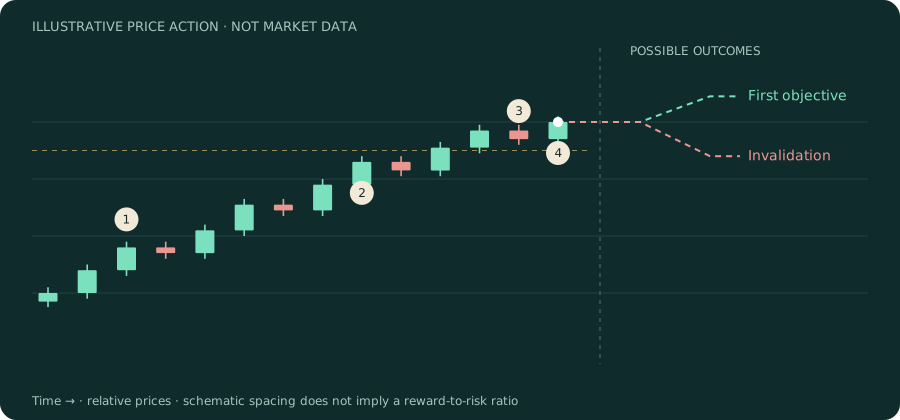
- ContextBrief pause in a small-pullback bull trend
- PressureBears cannot sustain even a modest correction
- SetupBrief pause in a small-pullback bull trend. Require rejection or acceptance at the marked structure.
- DecisionRenewed bull pressure after a pause or H1
The decision map
02 / QUICK REFERENCE- Location
- Brief pause in a small-pullback bull trend.
- Evidence
- Bears cannot sustain even a modest correction.
- Trigger
- Renewed bull pressure after a pause or H1.
- Invalidation
- A meaningful lower high followed by a strong bear break.
- First objective
- Next realistic continuation magnet.
- Pass when
- A wide entry bar makes the structural stop unaffordable.
03 / THE FULL ARGUMENT
Thesis & participant logic
Supplied study draft · adapted Brooks-style prose, not a quotation from Al Brooks
The market is in a small-pullback bull trend. Pullbacks last only one to three bars, bears cannot reach the EMA consistently, and attempts to short fail quickly. Waiting for a deep discount may leave me without an entry. I will buy a brief pause, H1 or small breakout after a strong close, using reduced size and a structural stop. My thesis is wrong if the market forms a meaningful lower high and strong bear breakout. I will use realistic trend-continuation targets rather than waiting for a large pullback.
This is one of the circumstances where a later, higher-price entry may have greater probability than an early countertrend attempt.
04 / FROM IDEA TO A PLAN
Manage the thesis, not the need to be right.
Before entry
Write the structural invalidation and first realistic objective. Size to the loss you have already accepted, including costs and possible slippage. If the stop is unaffordable, reduce size or pass.
After entry
Reassess follow-through against the evidence above. Do not widen the stop or add because price “has gone too far.” A bounce to your average entry is not a market thesis.
At the objective
Next realistic continuation magnet. Decide ahead of time whether to exit or retain a defined remainder. Continue only while structure and follow-through support the trade.
During review
Record the entry-time chart, planned risk, maximum adverse excursion, actual exit, and whether the thesis was invalidated. Judge the decision separately from the outcome.